

We Interviewed Experienced Ocean Sailors About Their Rig Choices
Why do experienced offshore and ocean sailors choose a sail plan with two headsails and sometimes modify their yachts from sloop to cutter rig?
Here are the answers.
Erik Aanderaa: Single-Handed Sailing in Heavy Weather
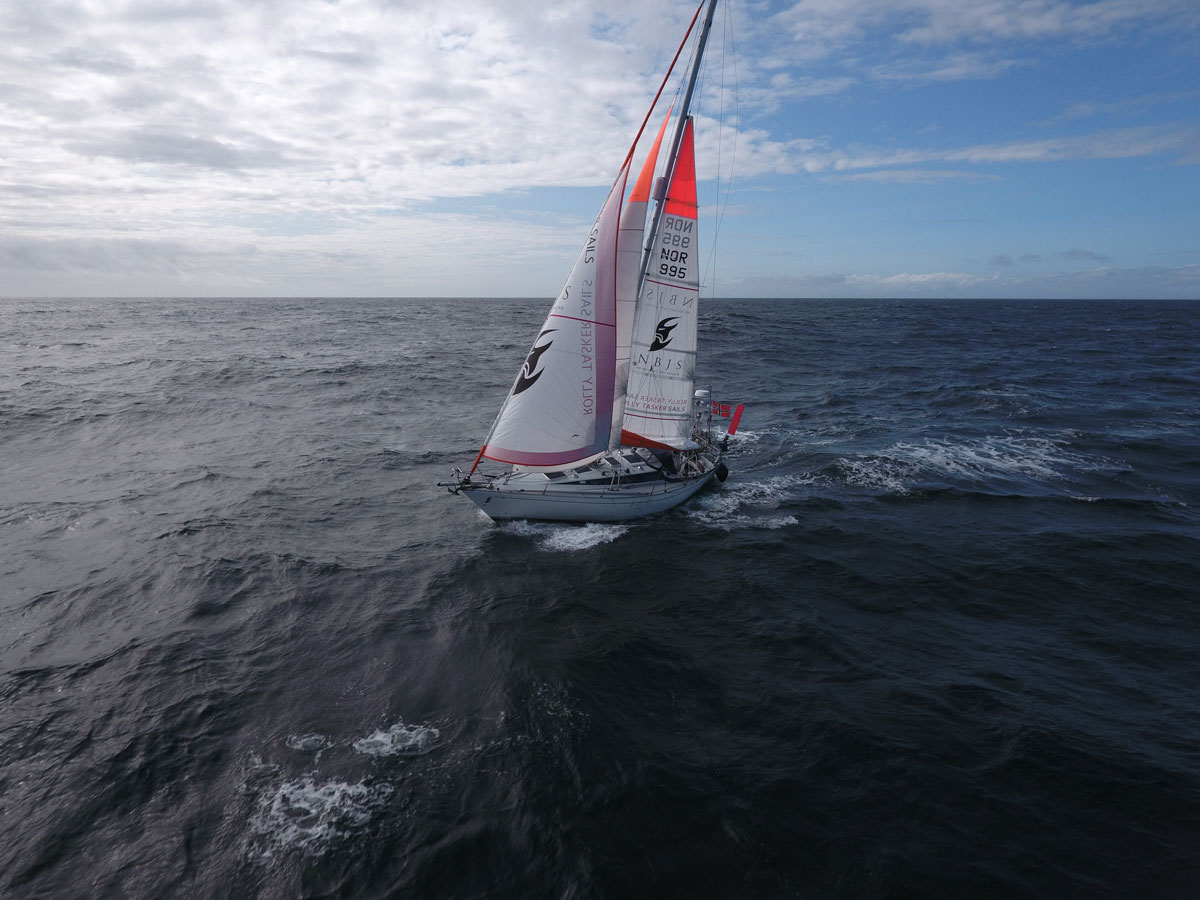
He is well known for sailing his Contessa 35 mostly single-handed through the demanding and often gruesome waters of the North Atlantic Ocean. Find out more about Erik: nbjs.no/about-me/ and www.youtube.com/channel/
Erik has modified his yacht from sloop to cutter by adding a cutter stay on which he can set a staysail jib, or even a storm jib.
The Norwegian sailor comments, “For winds up to 15 knots apparent wind speed, I use the full Genoa. For 15 to 25 knots, the jib on the inner forestay comes in handy. Winds above 25 knots soon force me to hoist the storm jib on the inner forestay. Although it is far from a storm at 25 knots, it is sufficient enough to bring my boat up to comfortable 5 to 6 knots of boat speed.”
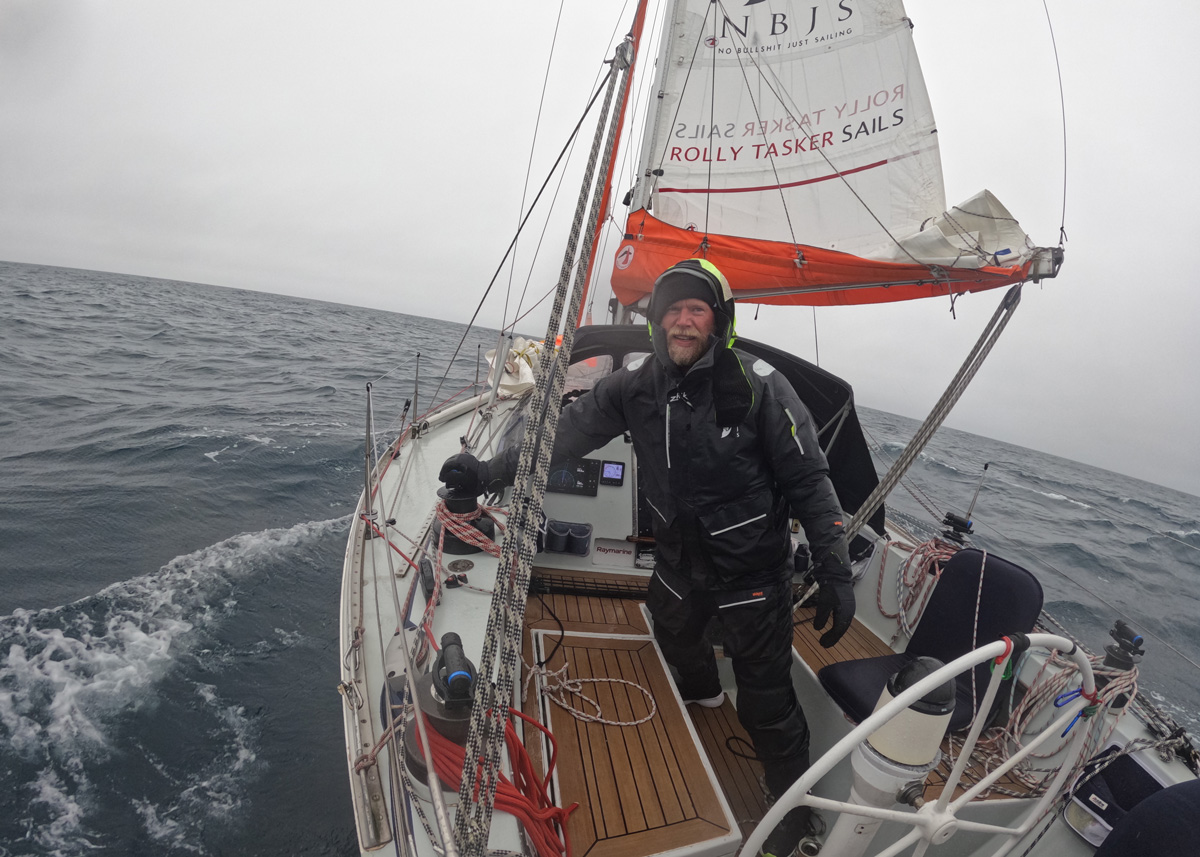
Why A Removable Inner Forestay Helps
Erik has his storm jib prepared ready for use on deck, attached to the cutter stay. “I can now swiftly deploy it if needed, as winds have a habit of suddenly picking up fast around these waters. The inner stay is a simple wire, and can be removed by loosening the turnbuckle which has quick release drop nose bolts to it. I like the simplicity of a removable forestay and a hank-on jib. This never fails when you need it!”
Balancing The Boat Under Reduced Sail.
“Easy handling and performance are both equally important to me. Being alone, you have to have a system you can more or less easily handle. It also needs to perform well to keep the boat up to speed. With the cutter rig, I can balance the boat much better. With reduced pressure on the rudder, steering improves, so my wind-vane can perform at its best, which makes it safer for single-handed sailing. In light winds you also have the option to fly two headsails on the bow, both with beam wind and downwind, to create a tiny bit more power through the swells.”
André Freibote: Professional Sailing the North Sea and Atlantic Ocean
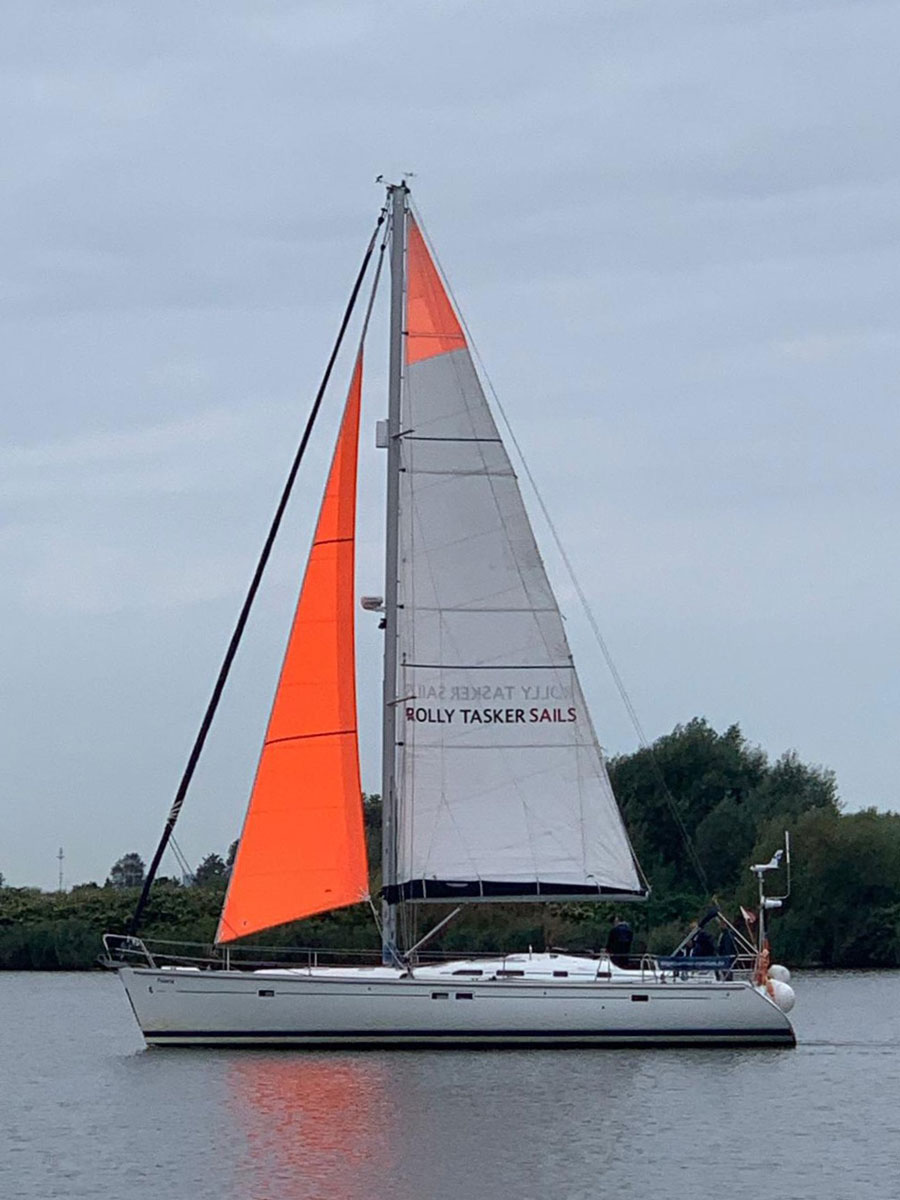
He professionally sails a Beneteau 473 with guests in the North Sea and Atlantic Ocean with his company “Segelpartner Nordsee [www.segelpartner-nordsee.de]”. He, too, has converted his sloop to a cutter.
Why He Avoids Running Backstays
André has what some call a Slutter rig, which is a hybrid of a Sloop and a Cutter rig. The Genoa is set on an outer forestay, and another stay is permanently fixed with a smaller jib on a furler. It is close behind and reaching far up the mast, almost like the foresail of a fractional rig. Why? “I did not want to have running backstays”, André says, “which are necessary on a traditional cutter. I sail with guests who cannot always actively participate in boat handling, so easy handling and safety are always at the fore of my thoughts.”
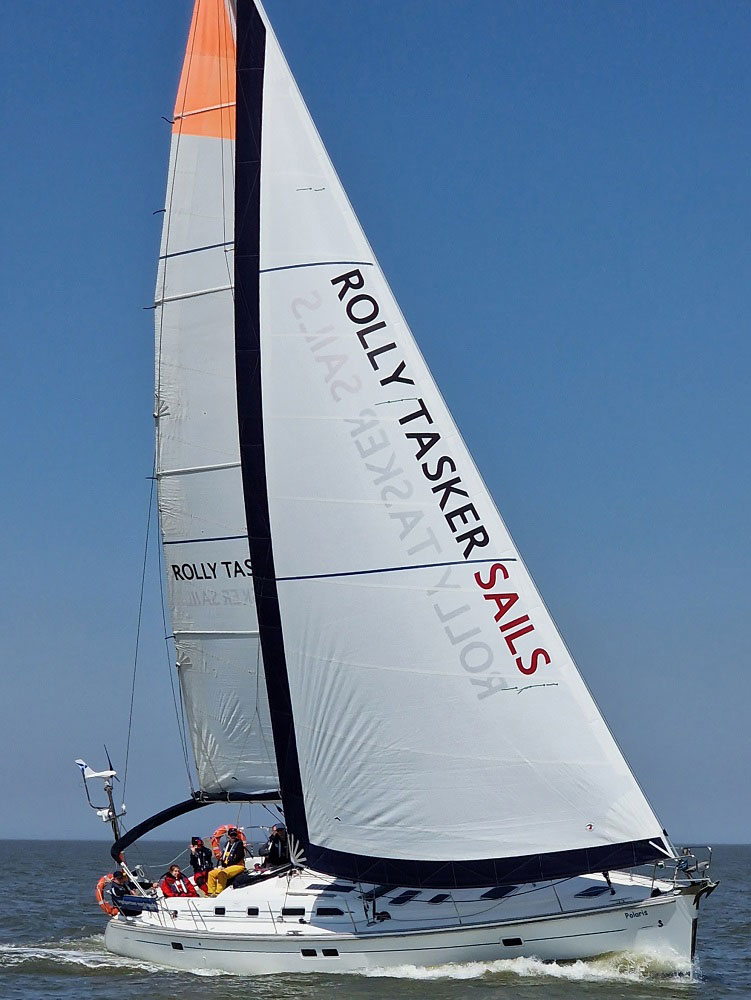
Heavy-Weather Handling
When the wind picks up, André can furl away the Genoa completely. He does not believe in “reefed” roller foresails and instead deploy the working jib. This is a blade jib about the size of a Genoa III. He then simply unfurls this small headsail from the permanently fixed inner forestay.
“The blade jib is ideal for upwind work in tough conditions, also for short-tacking in confined waters. Sometimes I change this sail to an even smaller jib, in harbour, if I know that conditions will get windy”, he comments.

This system is ideal in terms of safe and easy handling. The obvious drawback is that it is not possible to tack the main Genoa, as the gap between the two stays is so small. If he needs to tack with the Genoa, he will furl in the sail completely, tack, and unfurl it again on the new tack.
Optimal Sail for Tacking Upwind
“Tacking upwind with the blade jib is a dream”, André says. “So easy and worlds apart from sailing with a part-furled Genoa that will lose its profile and set terribly and also suffer from this treatment. And if the furling line parts in 40 knots of wind and you suddenly have the full Genoa being blown out, then you have a real problem!

Setting The Storm Jib Over The Furled Genoa
Talking of 40 knots of wind, I set my storm jib over the furled Genoa, as my storm jib is the Gale Sail by Rolly Tasker that slides over the furled Genoa, also giving additional safety against the Genoa unfurling involuntarily.”
Susanne Huber-Curphey: Legendary Solo Sailor
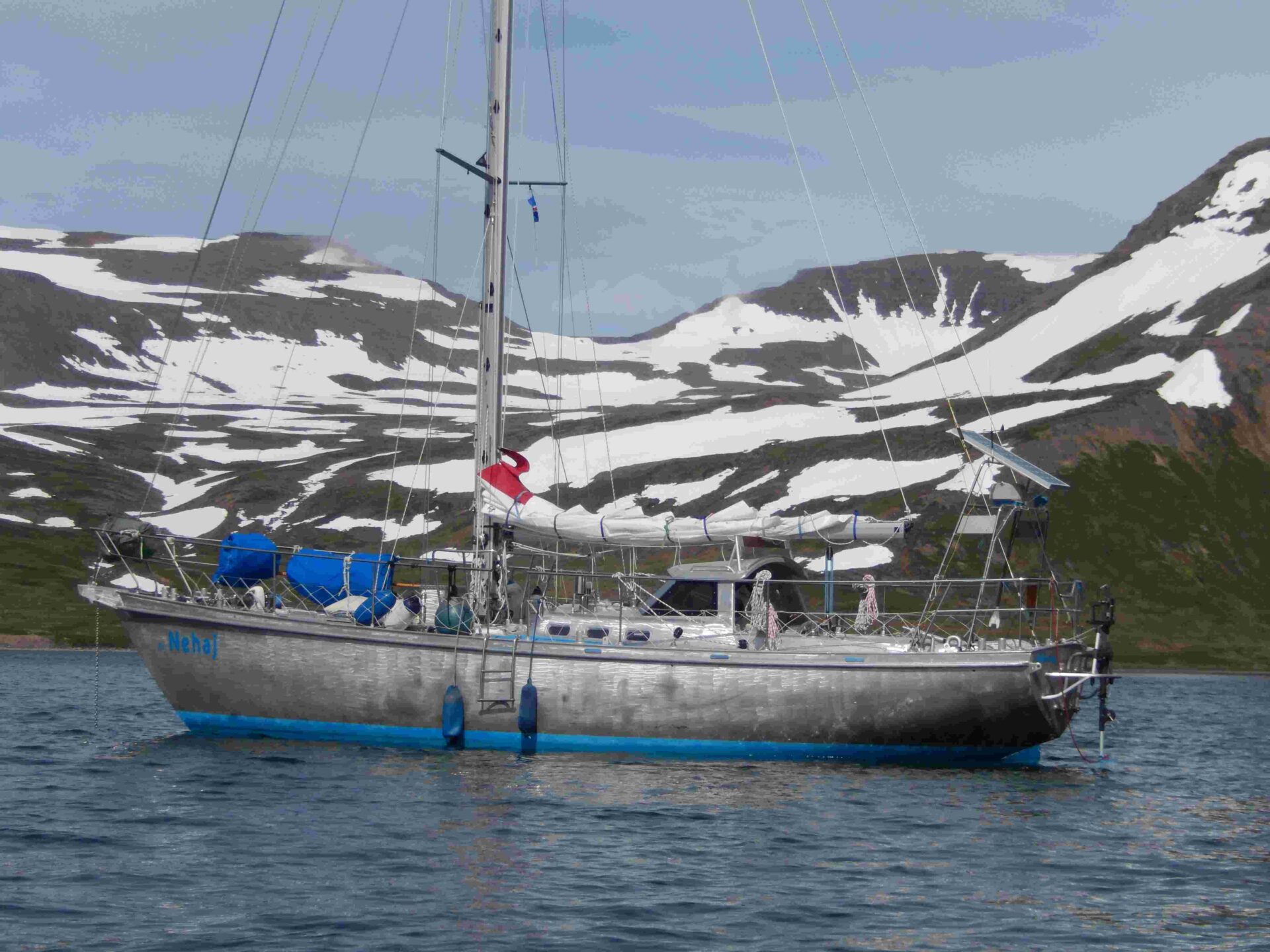
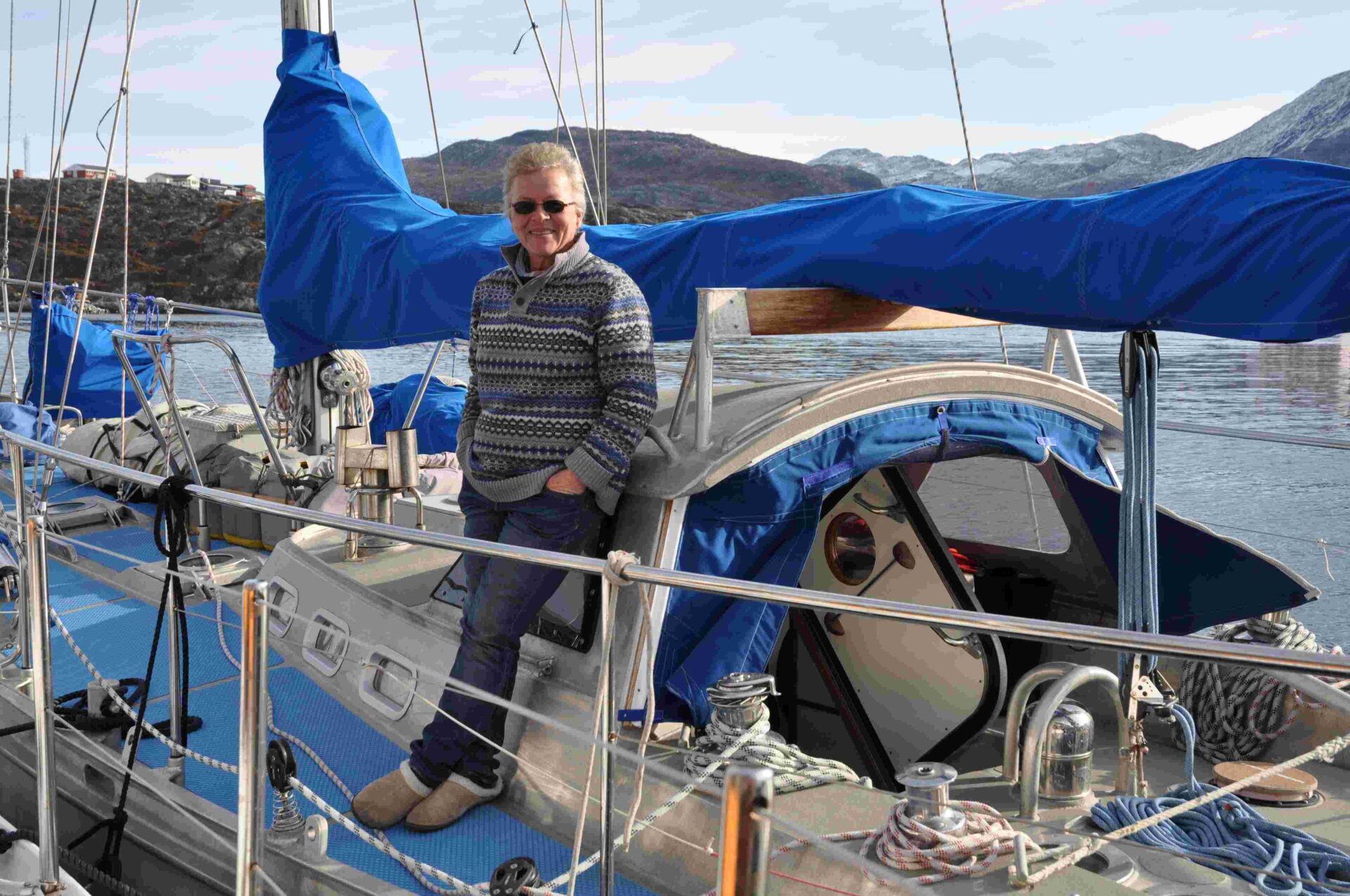
She is a living legend among ocean sailors. She sails solo on her aluminium cutter “Nehaj”. At Christmas 2025 she left New Zealand and arrived at the Azores soon after Easter 2026. Between June 2015 and April 2026, she circumnavigated four times solo. Three times via Cape Hoorn and once through the Northwest Passage.
A Traditional Cutter Built For Offshore Reliability
Her boat is a traditional cutter. “The cutter rig stands out due to the advantage of a second forestay, which significantly increases safety”, she says. “In addition I have two backstays, as well as the traditional arrangement of two forward and two aft lower shrouds. To safely absorb the load of this inner forestay within the mast profile, Nehaj has a ‘diamond rig‘. These are two short aluminium struts set at a 45-degree angle at the attachment point of the stay, supported with wires between the masthead and the first spreader. I insisted on additional running backstays as an option, which I regularly use in heavy weather.”
Two Headsails For Safer Sail Changes
“In general, two headsails are easier to handle than one large sail. In increasing wind each of the two smaller sails is much easier to change, take down, or reef. Since I do not use roller furling sails, I can work safely on the foredeck to change or take down one of the sails, while the wind-vane self-steering system reliably holds course. The boat continues to sail stable and balanced under the remaining headsail. I have little trust in furling sails and their potential problems, therefore all of my headsails use hanks. On the ocean, safety and simplicity are more important than complicated systems that make sailing convenient. No matter how strong a sudden gust might be, when releasing the halyard, the sail comes down to the deck by itself in just a few seconds. Besides, I always use the right sail for the present conditions.”
Choosing Between Genoa, Yankee, and Storm Jib
“On upwind courses, the divided headsail area shows an aerodynamically better performance. The Staysail has one reef, which I rarely use.”
The forestay gives the options of three sails. Susanne has a Genoa made from somewhat lighter cloth, a very narrow, high-cut ‘Yankee’, that resembles an air-plane wing profile: the luff spans the full forestay length, but at the sheeting point it is only 2.60 m wide. “Together with the staysail, this is my all-purpose sail combination up to about 30 knots of wind”, she says. “A third option is the quite frequently used storm jib. This sail is a miniature version of the narrow, high-cut Yankee with only 5.4 m² of area and a tiny width of 1.40 m at the sheeting point. This keeps the sail’s centre of effort relatively high, which is advantageous in heavy seas to maintain good sail pressure even in wave troughs.”
Heavy-Weather Downwind Options
“For downwind courses, I have a larger staysail made of lighter cloth, which can be easily poled out using the ‘small spinnaker pole’. The regular staysail is even simpler to handle with the pole. In heavy winds of the Southern Ocean I often sailed with it in combination with the Try-sail, or with the fourth reef in the mainsail.”
How To Pole Out The Genoa Single-Handed
She continues: “If I use the 5.5 m whisker pole to pole out the Genoa, the cutter stay is extremely helpful when setting this unwieldy spar. It needs the little trick of using the inner forestay, to manage this safely when alone. Initially the pole is clipped-in at the mast and rests on the bow pulpit, secured with a short rope to the cutter stay. Then I can calmly feed in the sheet, and attach the two downhaul lines and the topping lift. Once everything is ready, I raise the pole to about two meters, while it remains secured in its loop around the cutter stay. Only then do I release the temporary securing line, allowing me – even single-handed – to fully control the pole as I swing it out and adjust it. Only after the pole is in its desired position do I bring the sail over to the new side of the boat and trim the sheet from the cockpit. When taking the pole down, the same steps are followed in reverse.”
“I learned this trick from the American solo sailor Hal Roth, who said that solo sailors don’t need to be bodybuilders!”
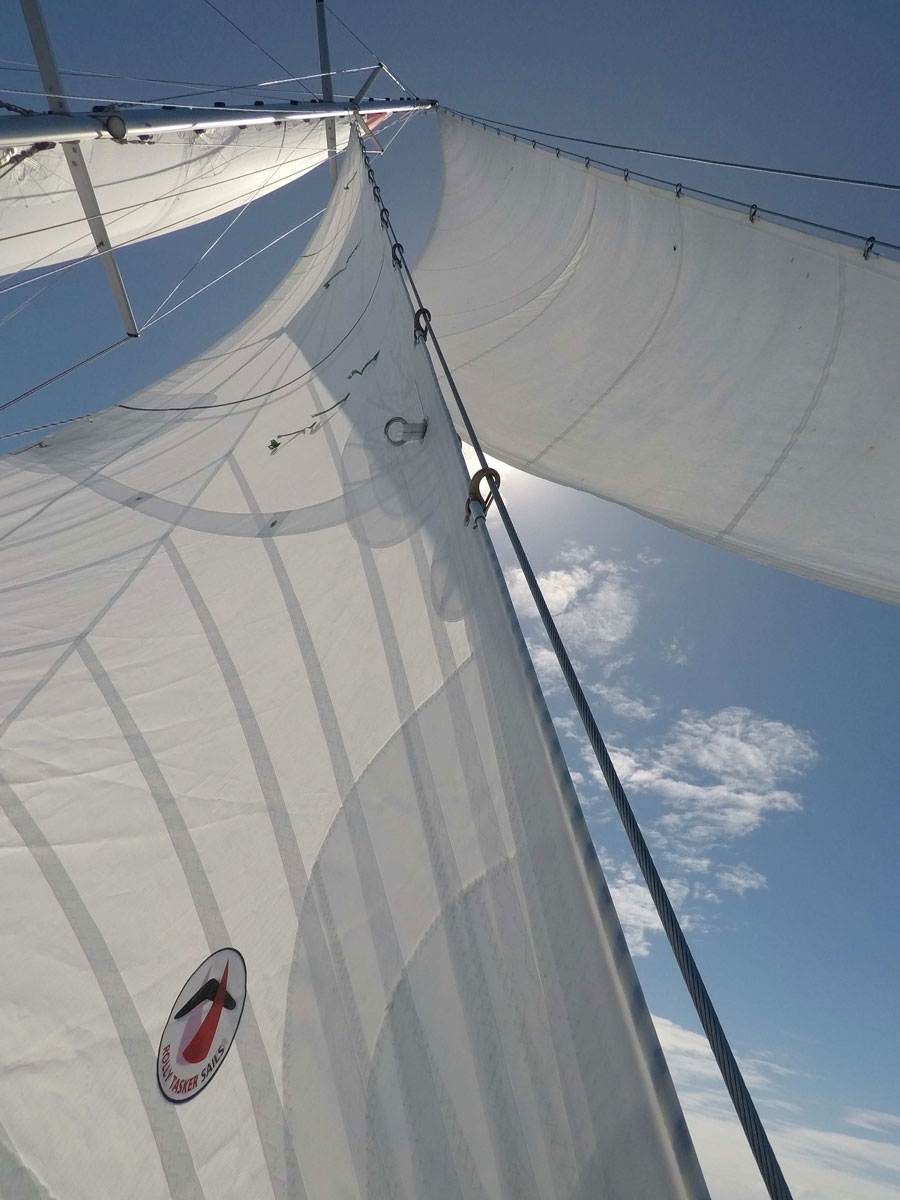
The three new sails from Rolly Tasker: Those three sails, yankee, staysail and mainsail, were delivered to New Zealand in May 2025, after Susanne’s intensive input about all details. “The quality and craftsmanship are excellent”, she says. The mainsail has two very unusual features. “The solidly made and very strong sail has no battens at all, and four reefs. I do not mind the slightly smaller sail area without battens”, Susanne says. “This new main has proven to be excellent in the 15.000 NM since New Zealand. Now I can tie in reefs on downwind courses even easier, as always without a course change, with no threat of battens getting jammed at the shrouds. Same applies if I need to lower the sail completely in stormy conditions.”
Four reefs in the main: “The fourth reef was also new to me. It has the area of the trysail that I have so far used. On the sail plan it looked ridiculously tiny, but was perfect in winds of above 35 knots. I’m very happy with it and have used it in Southern Ocean since New Zealand several times to perfection!”
Susanne’s summary: “Two smaller foresails plus a strong rig results in safer, easier, and more reliable sailing, especially when single-handing on the oceans!”
Greta and Michael – Liveaboards For 7 Years
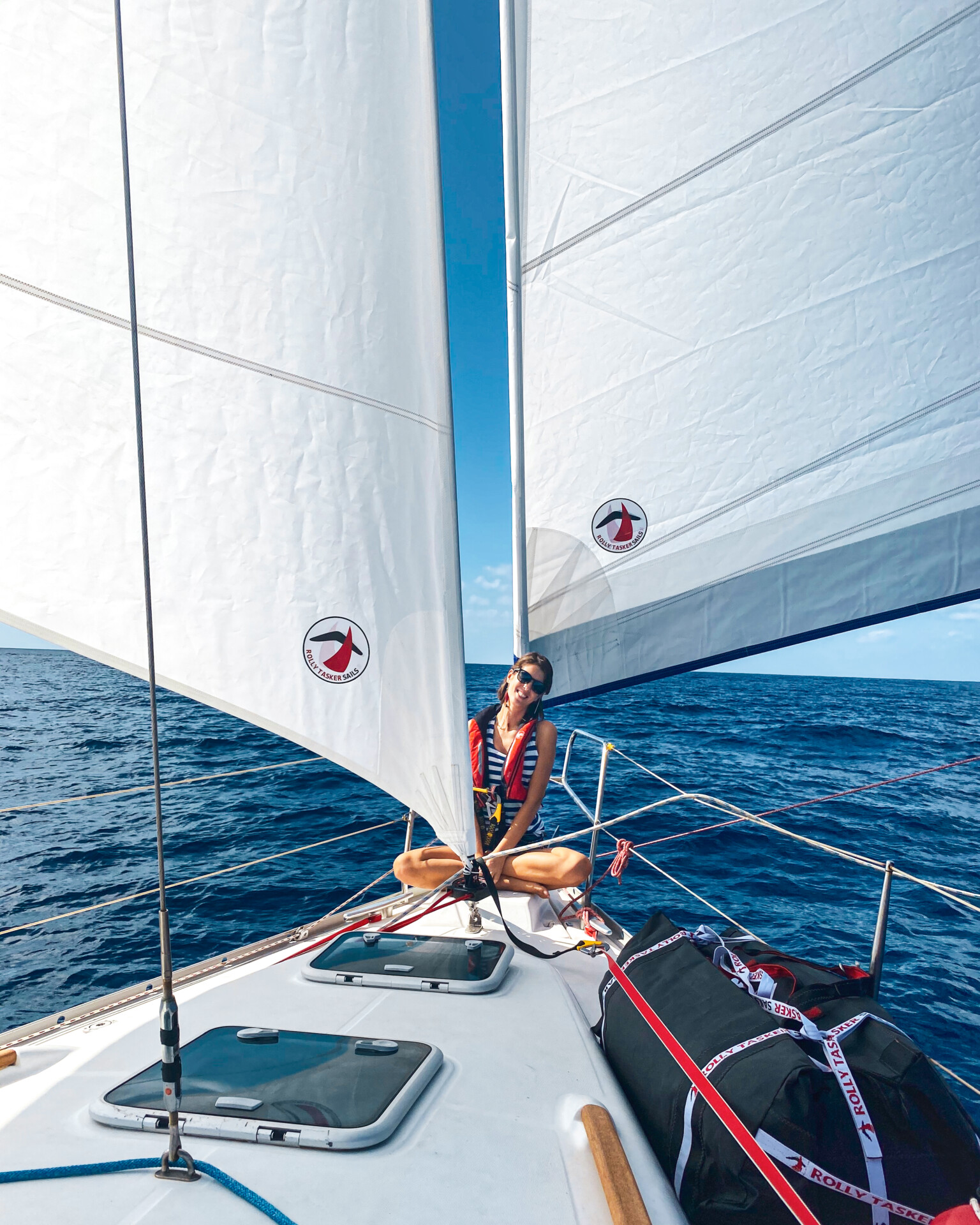
This charming couple lives and sails a Beneteau Oceanis 393 Clipper named “For Tuna” since April 2019. [Find out more: www.whensailing.com]
Why They Prefer Easy Handling Over Maximum Performance
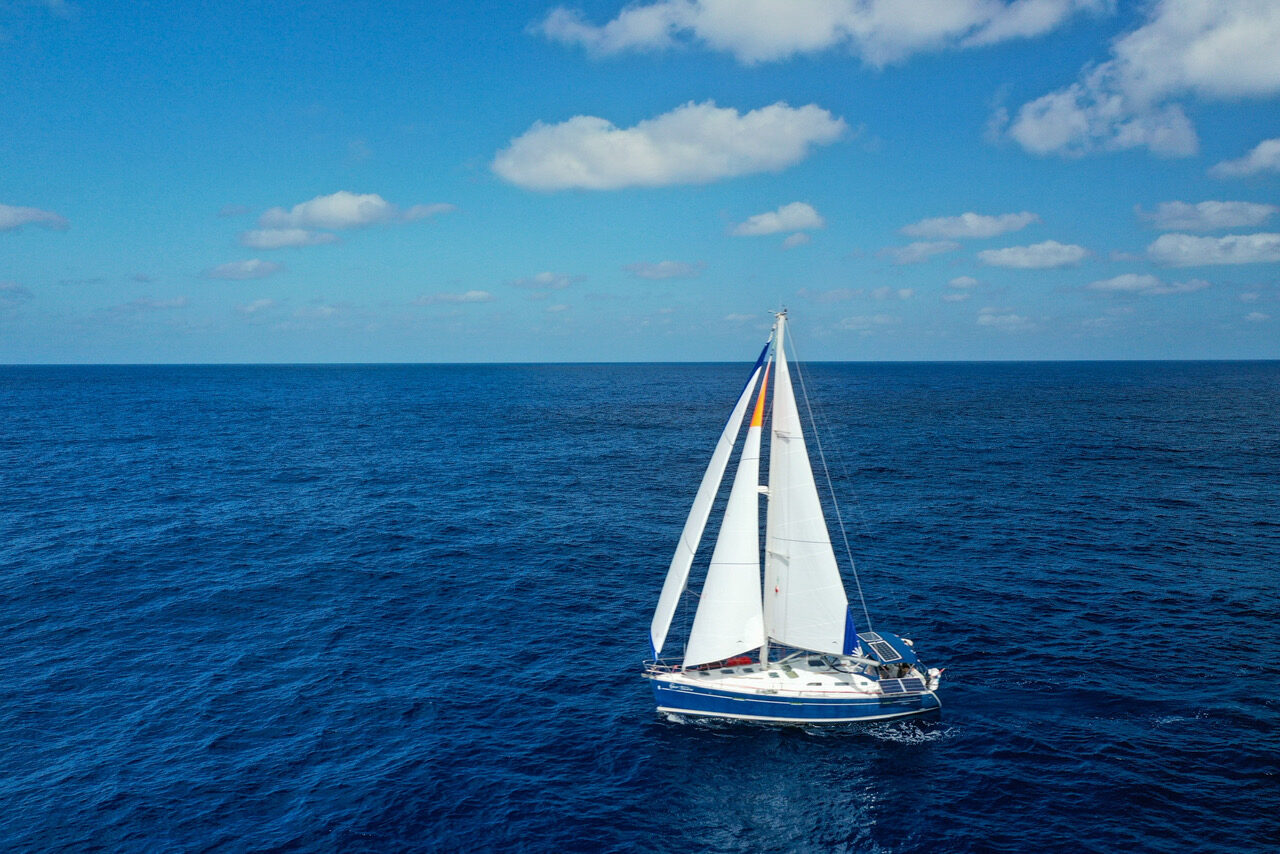
Their boat is primarily a sloop, but with the option on a removable cutter stay: “Handling is far more important to us than outright performance. We sail full-time and short-handed, so a manageable, low-stress sail plan is essential.”
Heavy-Weather Jib And Storm Jib Options
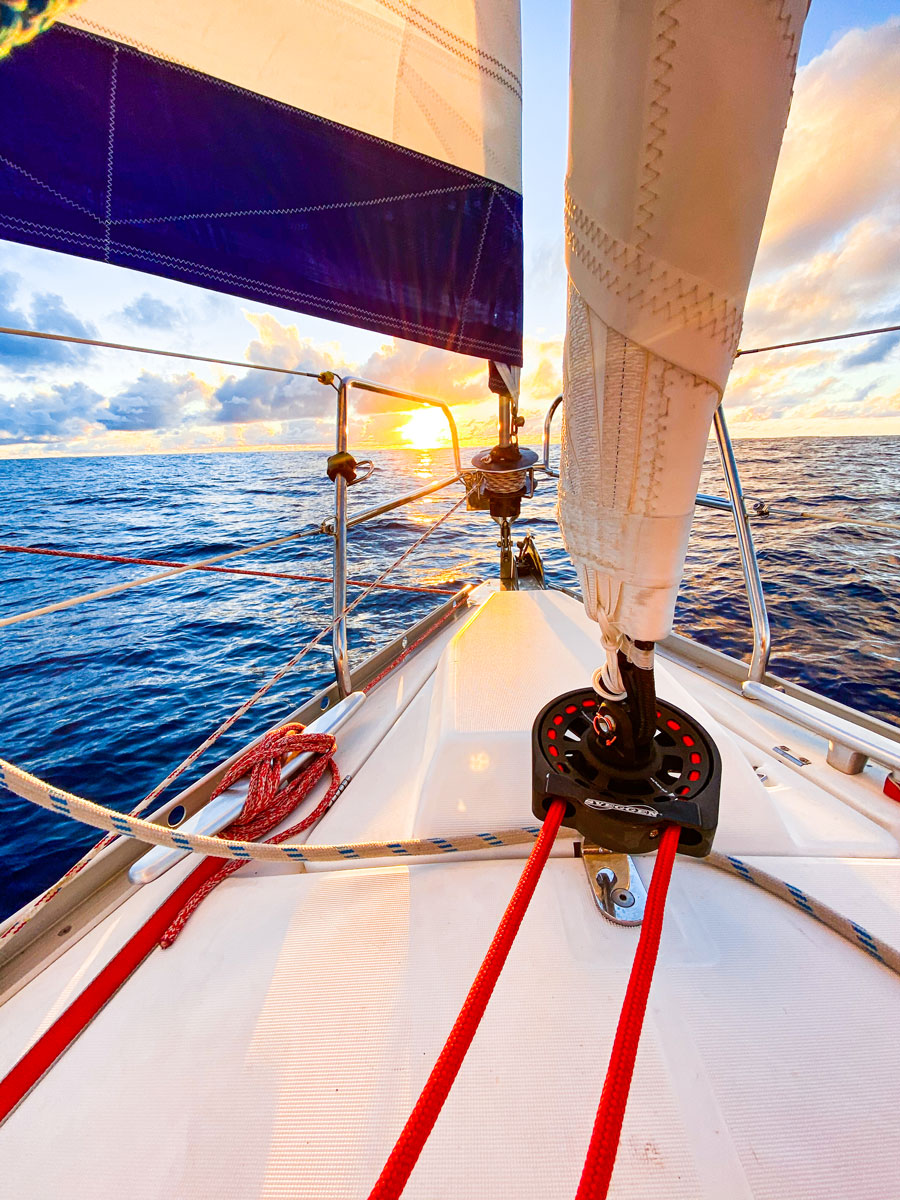
“Our primary upwind sail offshore is a furling Genoa. In addition, we carry a removable heavy-weather jib on a 2:1 Dyneema halyard system with a Sveggen furler mounted on a removable inner forestay. This gives us the ability to deploy a smaller, stronger headsail when conditions require it, without committing to a permanent cutter installation. In our experience, having a powerful genoa for light to moderate conditions combined with the option to set a dedicated heavy-weather jib provides flexibility and safety.”
Keeping The Foredeck Clear For Normal Sailing
“We intentionally avoided a fixed inner forestay because it complicates tacking with a large Genoa and reduces usable foredeck space. The removable heavy-weather jib allows us to keep the deck clear during normal sailing while still having a robust option ready for deteriorating conditions. Safety and control outweigh any small performance gains from carrying maximum sail area.”
“The heavy-weather jib gives us confidence in strong winds, squalls, or storm conditions, and it also serves as the base setup for quickly setting the storm jib when needed. Both the heavy-weather jib and the storm jib are set on the removable inner forestay. We typically rig this stay before longer offshore passages, when strong weather is forecast, or when we expect extended sailing in exposed conditions.”
“The heavy-weather jib is a very versatile sail for us. We use it from close-hauled all the way to deep downwind angles. On longer passages it also allows flexible combinations with other sails, for example, pairing it with the Genoa or gennaker for wing-on-wing configurations or to maintain balanced power on a beam reach. The storm jib is hoisted on the same stay, which makes deployment straightforward and fast when conditions deteriorate.”
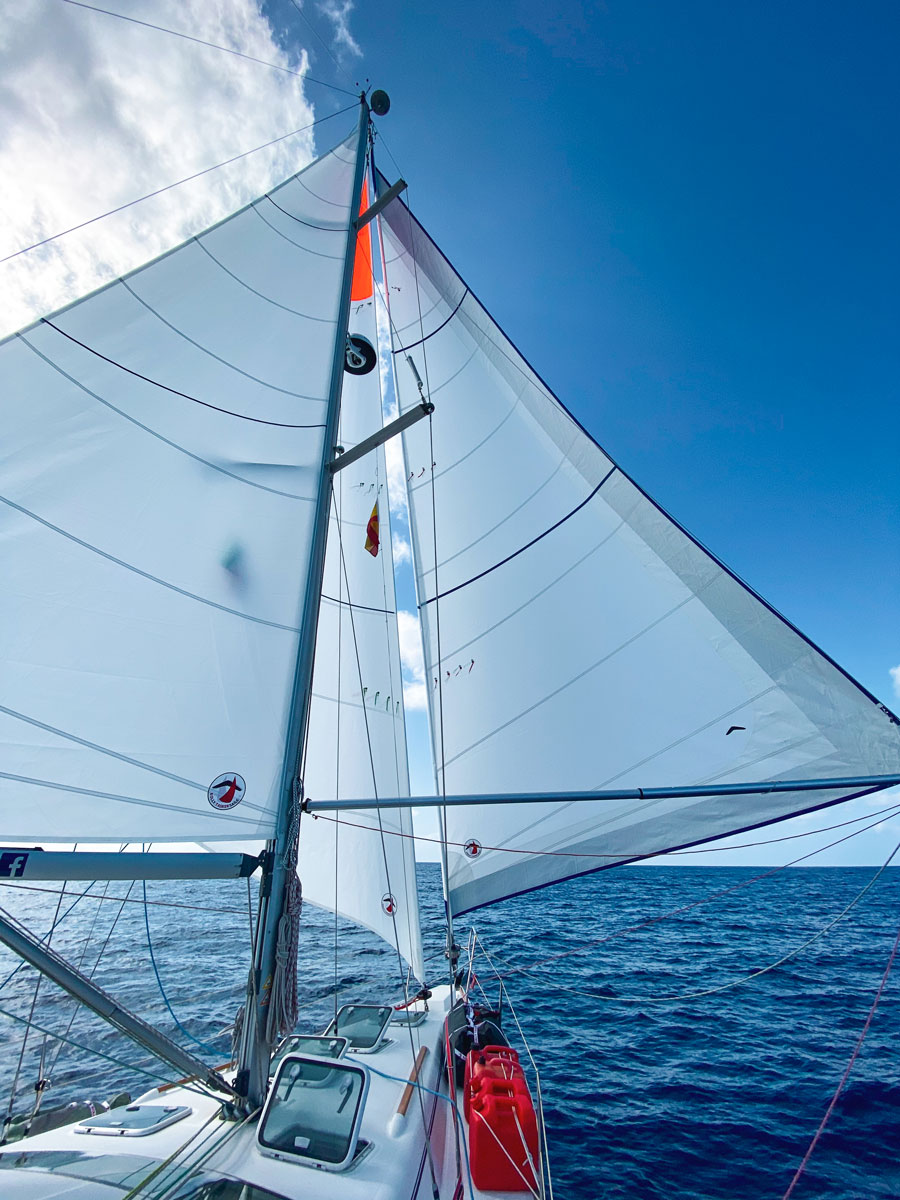
“For us, the main benefits are flexibility and adaptability. A removable cutter stay allows you to expand your sail plan when conditions demand it, while keeping the foredeck clear and simple during normal sailing. It adds valuable intermediate options between full sail and heavy-weather configurations.”
Sven Cornelius: Family Cruising And Performance Sailing
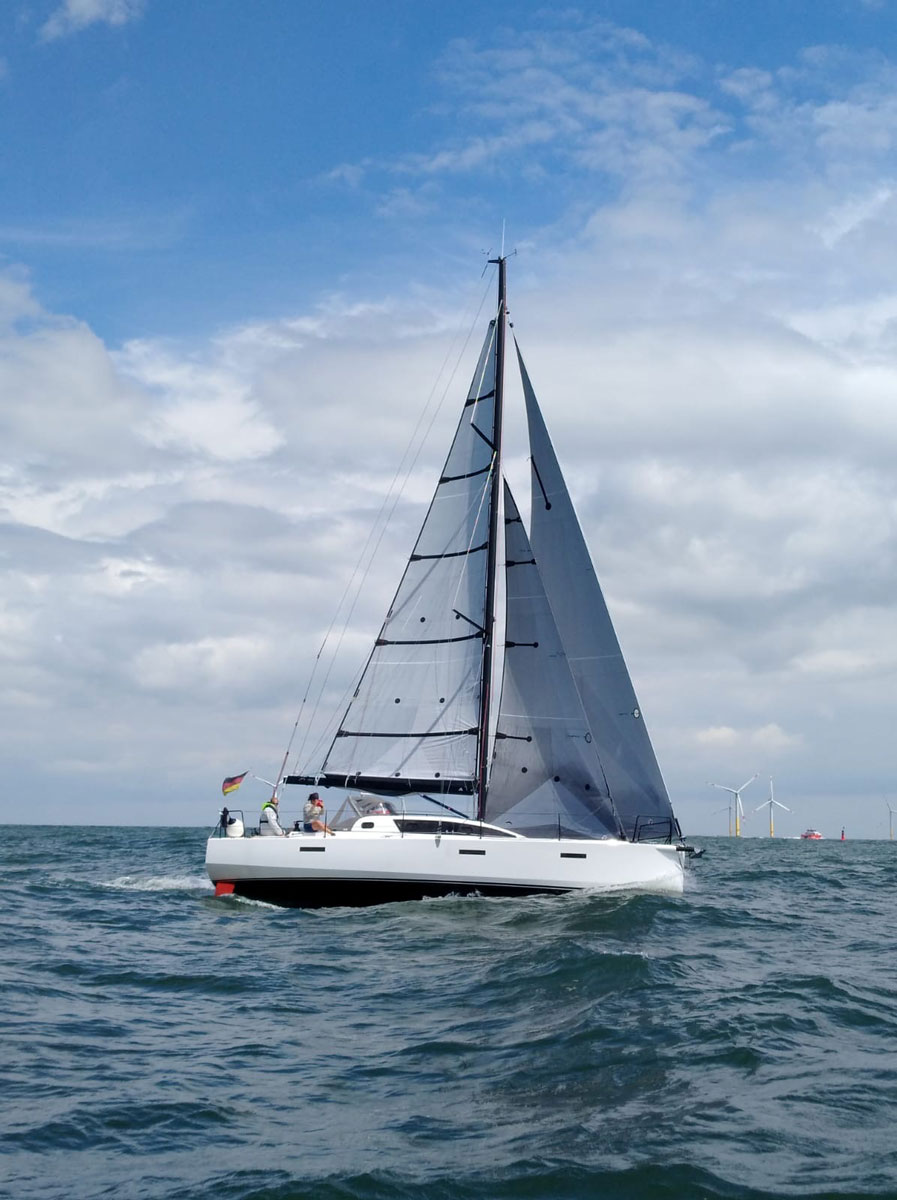
He is the CEO of Rolly Tasker Sails and his boat is a modern, fast cruiser JPK 38. It has a cutter rig with a semi-fixed cutter stay which carries a staysail on hanks.
When To Use The Staysail
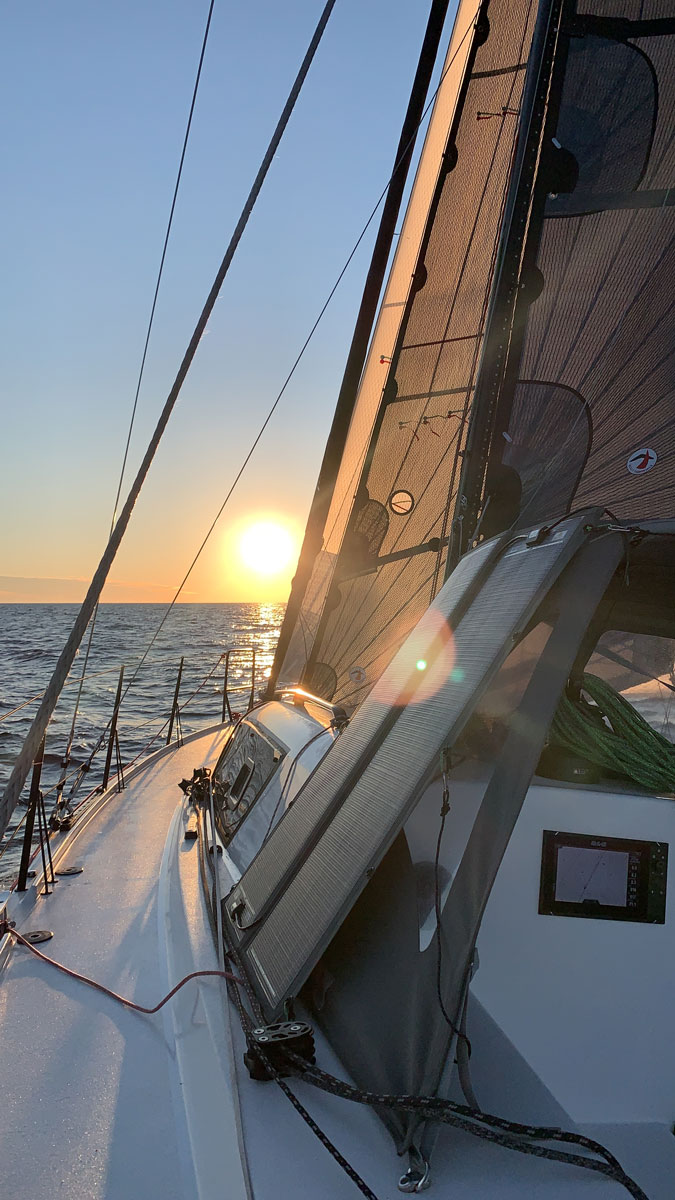
The outer stay has a Genoa on a furler and this gives Sven great flexibility: “The staysail on hanks stays on deck even when not hoisted and not in use. The staysail is not furled and this allows us an optimized leech design with battens for maximized sail performance. The staysail is hoisted upwind with full main if wind increases to about 18 to 20 knots. This is very comfortable and safe sailing. In about 25 knots we tie in the first reef, and have reefs 2 and 3 ready in case it increases further. The staysail can also be used together with the Genoa when reaching, which we then sheet outside the shrouds. The staysail is also perfect in combination with the Code Zero or Asymmetric. If it really pipes up hard, I can simply furl away the Genoa and sail on under staysail and reefed main alone, which is a very balanced sail plan.”
Furling The Genoa Before Tacks Or Removing The Cutter Stay
The drawback here is, again, tacking the Genoa when beating: “I furl it at least partly before each tack”, Sven reports. “However, if we know that we will be short tacking under Genoa we can easily remove the textile cutter stay and the staysail to have a clear foredeck.
Why Hanked Sails Still Matter
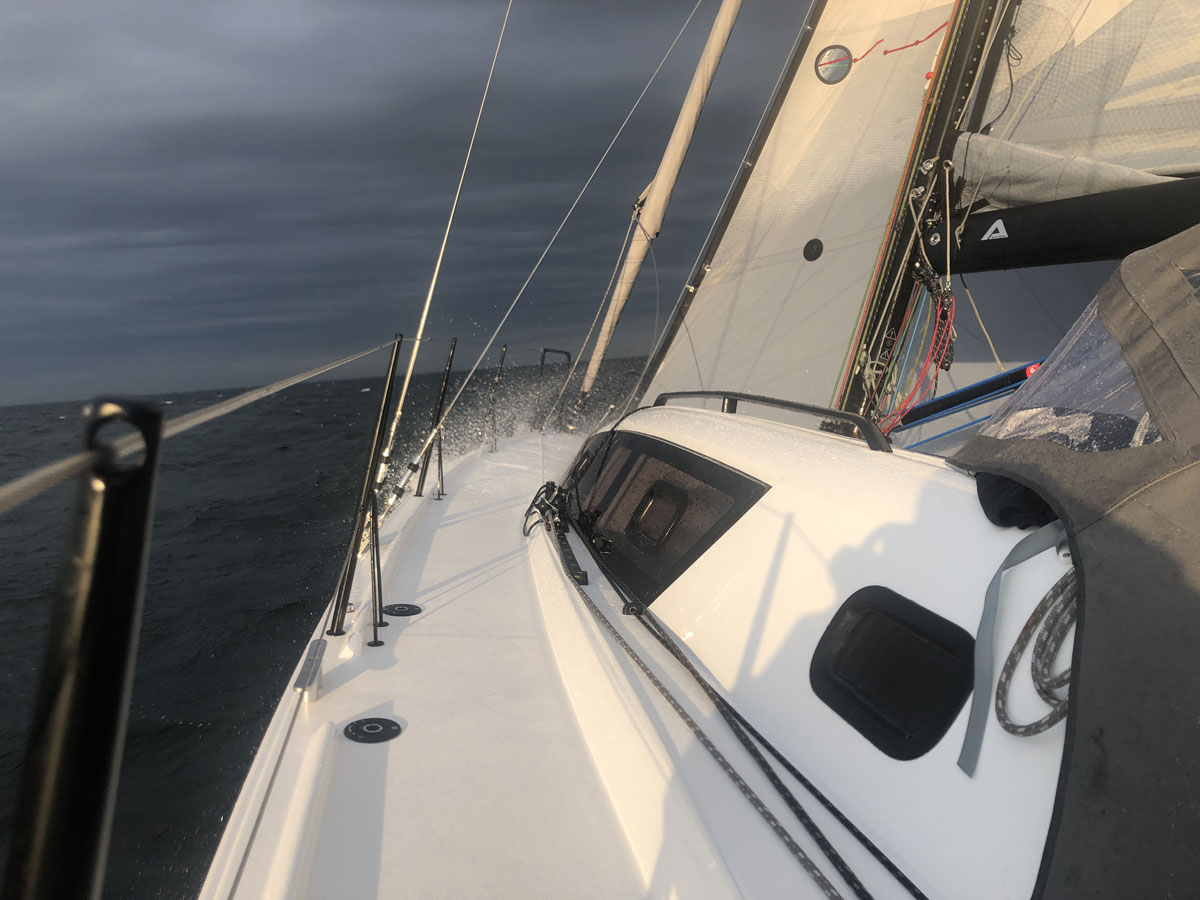
The big plus of the cutter stay is that this is also the stay for the storm jib. As for the hanks: I consider hanked-on foresails as the 4×4 wheel drive in sailing as it avoids the risk of furling system failure. The sail will always come down if the halyard is eased.”
“As our founder, Rolly Tasker, always said, ‘Keep it strong, keep it light, keep it simple’, which is exactly what this option stands for.”
Conclusion
These are some variations of the double-headsail rig. The specific set-up depends on the type of sailing that each individual boat or crew pursues. Sven, for example, opts for the reliable and rugged “4X4” option, similar to Susanne’s preferences but not quite as consequential. “We, my family and I sail in the North Sea and Baltic and not in the Southern Ocean as Susanne does”, Sven explains, “but we do look for reliability and safety as well as maximised sail performance.”
Greta and Michael on the other hand chose a different approach, with the possibility to remove the cutter stay and sail with the large Genoa of a sloop. This is great for more sporty sailing, which allows tacking upwind under Genoa. André’s option, on the other hand, also has its advantages especially for his kind of challenging offshore sailing with guests, with the staysail permanently rigged and instantly available without the need for someone to work on the foredeck at sea.
The final set-up is entirely dependent on personal preferences and the type of sailing.


