


Handling a Screecher on a multihull is basically straightforward but does require some thought and coordination as the sail’s size generates serious loads and a lot of power. The sail will significantly boost performance, but care must be taken not to overpower the boat.
What Kind of Sail it is: Differences to Genoa and Code Zero
A Screecher is a versatile multihull sail. It is something of a cross between a large, light-wind Genoa and a Code-type reaching sail. It is designed with a fuller profile than the Genoa but flatter than the Code sail. It is typically flown from a bowsprit and either uses an anti-torque luff cable for furling or is set from a permanently installed furler. The Screecher is especially useful for cats who often have only very small fractional jibs that are fine for upwind work in a breeze but not so effective when on a reach.

When Can it be Used?
Up to around 20 knots of apparent wind. Remember that the apparent wind increases quickly as the Sreecher is set and the multihull accelerates. The YouTube vlogger and sailor Sam Holmes (@sam holmes sailing) uses a Rolly Tasker Screecher on his cruising catamaran and reports: “We use it for anything outside of close hauled or running. Approximately 45 to 140 degrees off the wind in 3 to 18 knots apparent. It lets us get moving in very light winds and makes great speed in moderate breeze.”
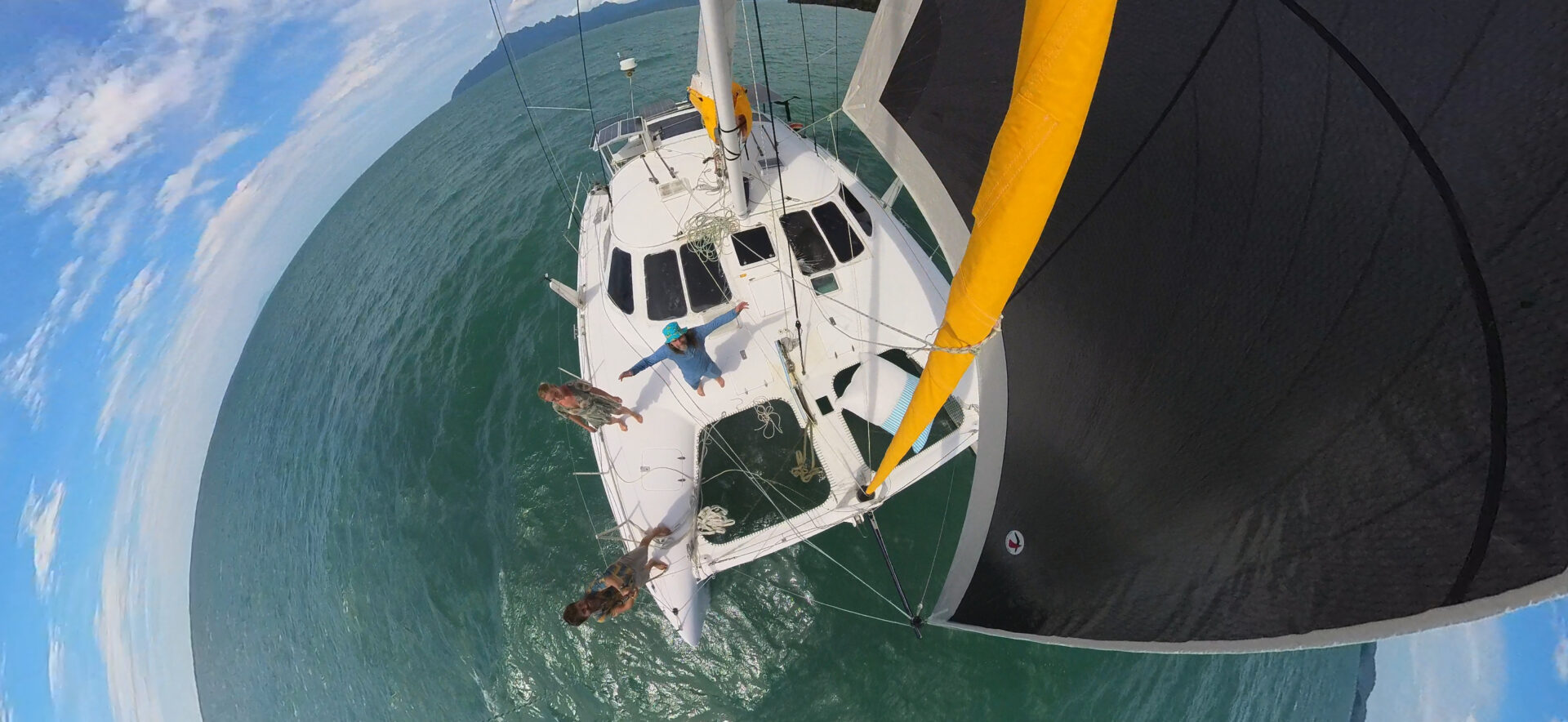
The Screecher Set-Up
The Screecher is usually tacked to a bowsprit or a dedicated tack point at the bow. The tack line must be strong and adjustable to handle the loads which are considerable. The bowsprit and its attachments also have to take heavy loads. Inspect them regularly for wear or damage. Accordingly, also ensure that all lines, blocks, and fittings are sufficient for the loads.
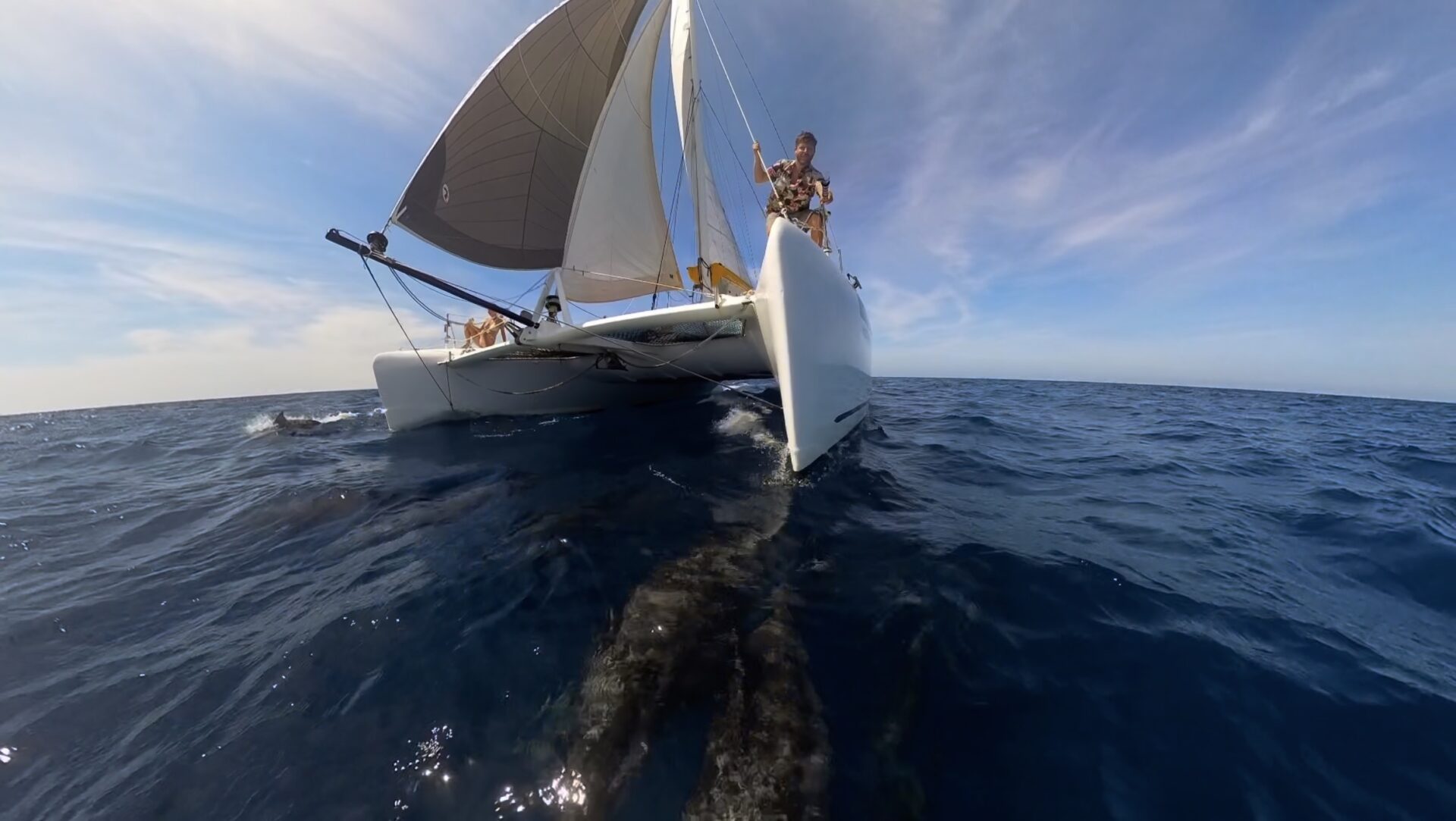
Hoisting and Trimming the Screecher
- Ensure that the halyard, sheets, and furling line are ready.
- The bowsprit must be extended and secured.
- Cleat off the continuous furling line before hoisting so it does not unfurl accidentally.
- The Screecher is ideally hoisted while it is still fully furled and the boat is on a broad reach or downwind. It is best to set the Screecher with the mainsail, the main not only provides much drive but also a wind shadow for unfurling or furling the Screecher.
- As the sail fills, avoid sudden loads on the sheets, easing them when unfurling and only trimming them once the sail is fully unfurled.
- As speed increases, the apparent wind will move forward and the sail will have to be sheeted in accordingly.
- The twist is controlled by adjusting the sheet lead and halyard tension. Too much twist can reduce power, while too little can cause excessive loads.
The correct halyard tension is also important for smooth furling. This will be found after a few times furling and unfurling the sail. - When gybing, best furl the sail fully, then gybe the boat and unfurl the Screecher on the new tack to avoid wraps around the forestay or rigging.
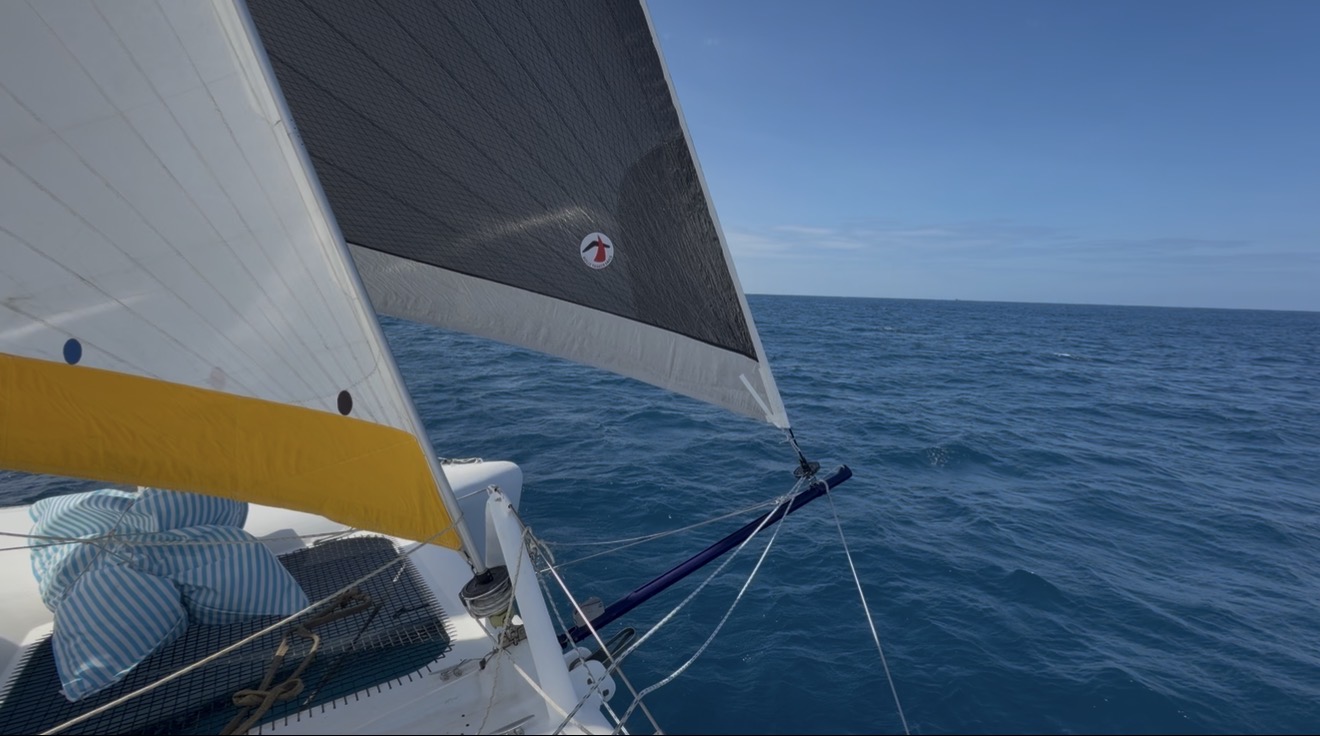
Retrieving the Screecher
- Bear off for easier furling, in the wind-shadow of the mainsail (as one would also do with a Genoa).
- Once fully furled, take down the Screecher and stow below decks.

Stowing the Screecher
Always stow the sail in a dry locker and out of the sun. Do not leave it up furled, which only causes windage and weight up front. More important, the sail might not be furled tight over its full length, with the risk of at least partial unfurling by itself, usually in a gust at the most critical moment. Furling really is to make setting and retrieving so much easier.
Summary
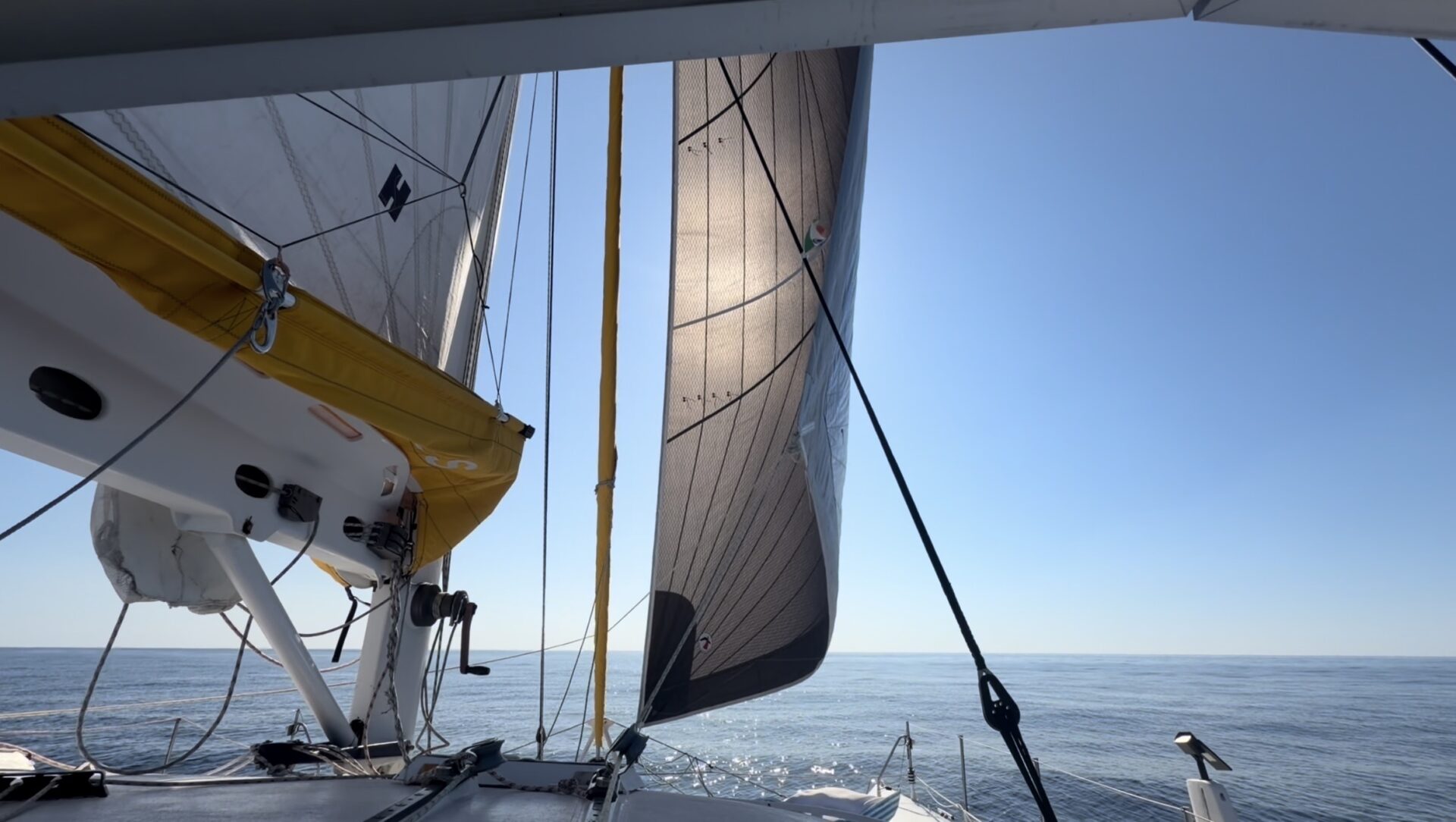
The Screecher is a popular choice for multihulls due to its adaptability across a range of wind angles and conditions, offering both performance and ease of handling.
The sail will be designed in radial cut and be made either of high-quality Dacron or a specialised laminate.
You want to know how much it costs? Get a quote